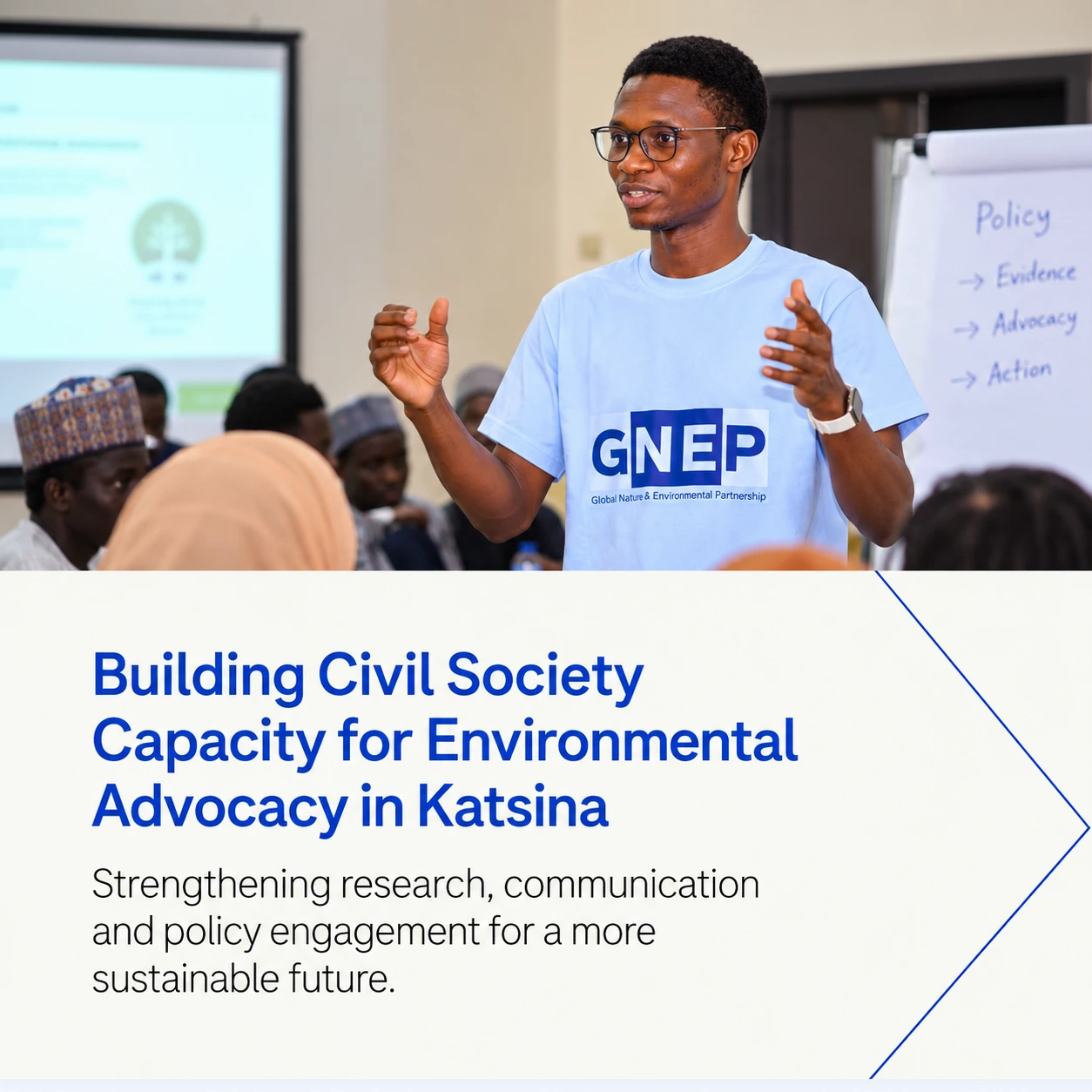
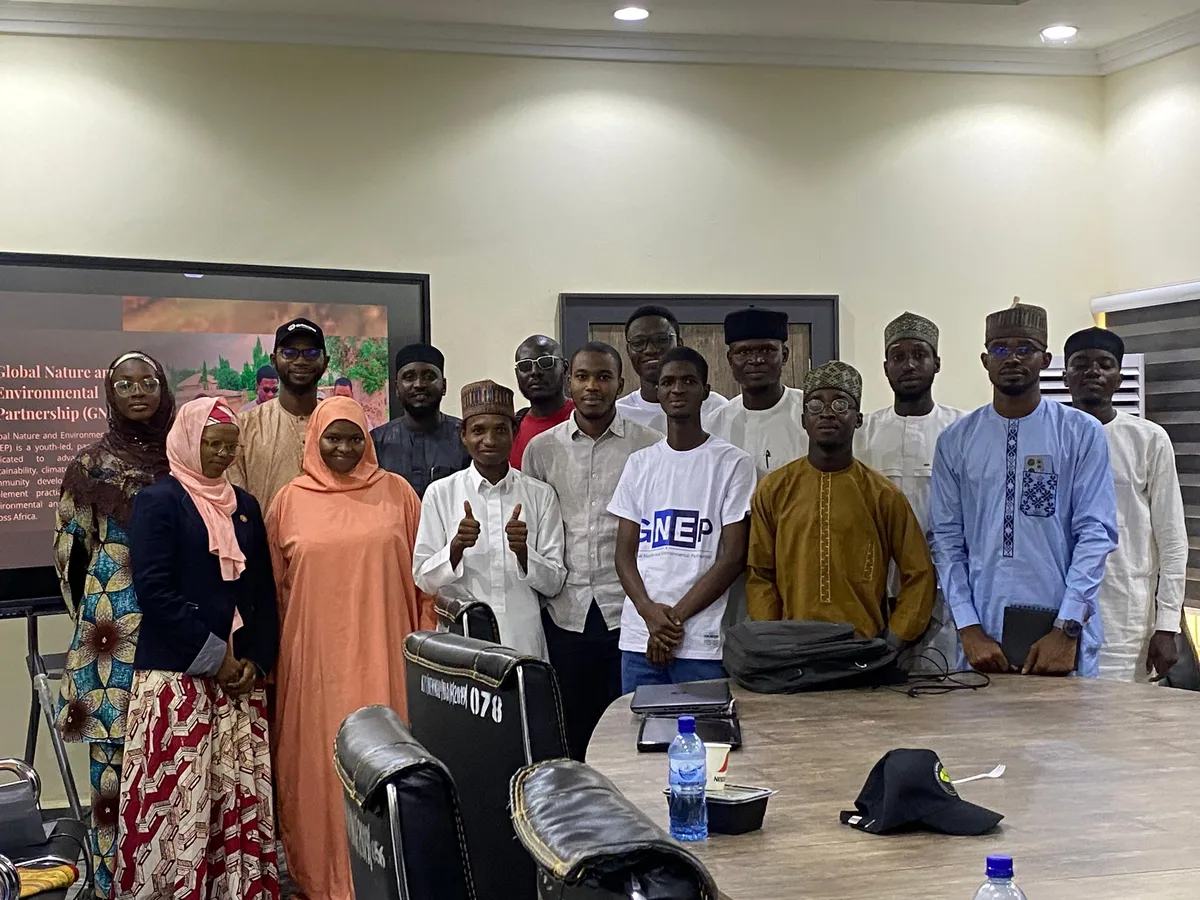
The Global Nature and Environmental Partnership (GNEP), in collaboration with The Green Minds Space, organised a capacity-building workshop in Katsina State to strengthen the policy communication, proposal development, and advocacy skills of civil society representatives.
The workshop brought together 20 civil society representatives for practical learning on policy brief writing, competitive funding proposal development, persuasive communication, and the use of artificial intelligence (AI) tools to support research and project development.
Strengthening Civil Society Capacity
Civil society organisations play an important role in connecting communities with policymakers, advocating for improved public services, and promoting inclusive development. However, translating community needs and research findings into compelling policy recommendations and fundable projects requires specialised skills.
The workshop was designed to address this capacity gap by equipping participants with practical tools to develop clear policy arguments, formulate structured project proposals, and communicate their ideas effectively to decision-makers and potential funding partners.
Through guided sessions and practical exercises, participants explored how to identify policy problems, organise supporting evidence, develop actionable recommendations, and present project ideas in ways that respond to institutional priorities and community needs.
From Policy Analysis to Practical Recommendations
A central component of the workshop focused on policy brief writing. Participants were introduced to the importance of concise, evidence-based policy communication and the need to present complex issues in accessible language.
The sessions emphasised the relationship between problem identification, evidence, policy options, and actionable recommendations. These skills are relevant to civil society organisations seeking to contribute meaningfully to public policy discussions and strengthen accountability.
Developing Competitive Project Proposals
The workshop also addressed project proposal development, with attention to the process of translating identified problems into structured interventions.
Participants explored key elements of proposal writing, including defining project objectives, identifying target beneficiaries, outlining activities, articulating expected results, and presenting project ideas clearly to potential funders.
Strengthening these skills can help civil society organisations communicate their priorities more effectively, identify appropriate funding opportunities, and develop projects that respond to the needs of the communities they serve.
Communicating Ideas with Confidence
Effective communication was another important element of the workshop. Participants explored how to present project ideas concisely, explain the significance of proposed interventions, and communicate their value to different audiences.
Pitch communication is particularly useful when engaging potential partners, presenting proposals, participating in funding competitions, and advocating for institutional support. The workshop encouraged participants to connect the problem they seek to address with the proposed response and its intended results.
Exploring AI for Research and Project Development
The programme introduced the application of AI tools to research and proposal development. Participants considered how these tools can support information organisation, preliminary research, drafting, and productivity.
The emphasis was on using technology as a support for professional work while retaining human judgement, source verification, contextual understanding, and responsibility for the final output. These considerations are particularly important when developing evidence-based policy documents and funding applications.
Building Stronger Civil Society Organisations
Through this initiative, GNEP continued its work at the intersection of research, policy engagement, youth participation, and institutional capacity development. The workshop reflected the organisation's commitment to helping civil society actors strengthen their ability to communicate evidence, develop practical interventions, and participate in policy processes.
The participation of 20 civil society representatives provided a foundation for further learning and professional engagement. Sustained application of the skills gained, alongside continued access to mentorship, research resources, and partnership opportunities, will be important for translating training into improved organisational practice.
Looking Ahead
GNEP recognises that effective environmental and development action depends partly on the capacity of institutions and community organisations to articulate problems, develop credible solutions, and engage decision-makers.
Through future training, research activities, and institutional partnerships, GNEP aims to continue supporting the development of practical skills that enable civil society organisations to contribute to more informed policymaking and locally relevant development initiatives.
About GNEP
The Global Nature and Environmental Partnership (GNEP) is a youth-led environmental initiative based in Katsina State, Nigeria. Its work focuses on climate action, environmental sustainability, youth engagement, policy advocacy, nature restoration, and capacity development. GNEP works to connect people, policy, and practical solutions in support of more resilient communities.
Workshop Partners: Global Nature and Environmental Partnership (GNEP) and The Green Minds Space.