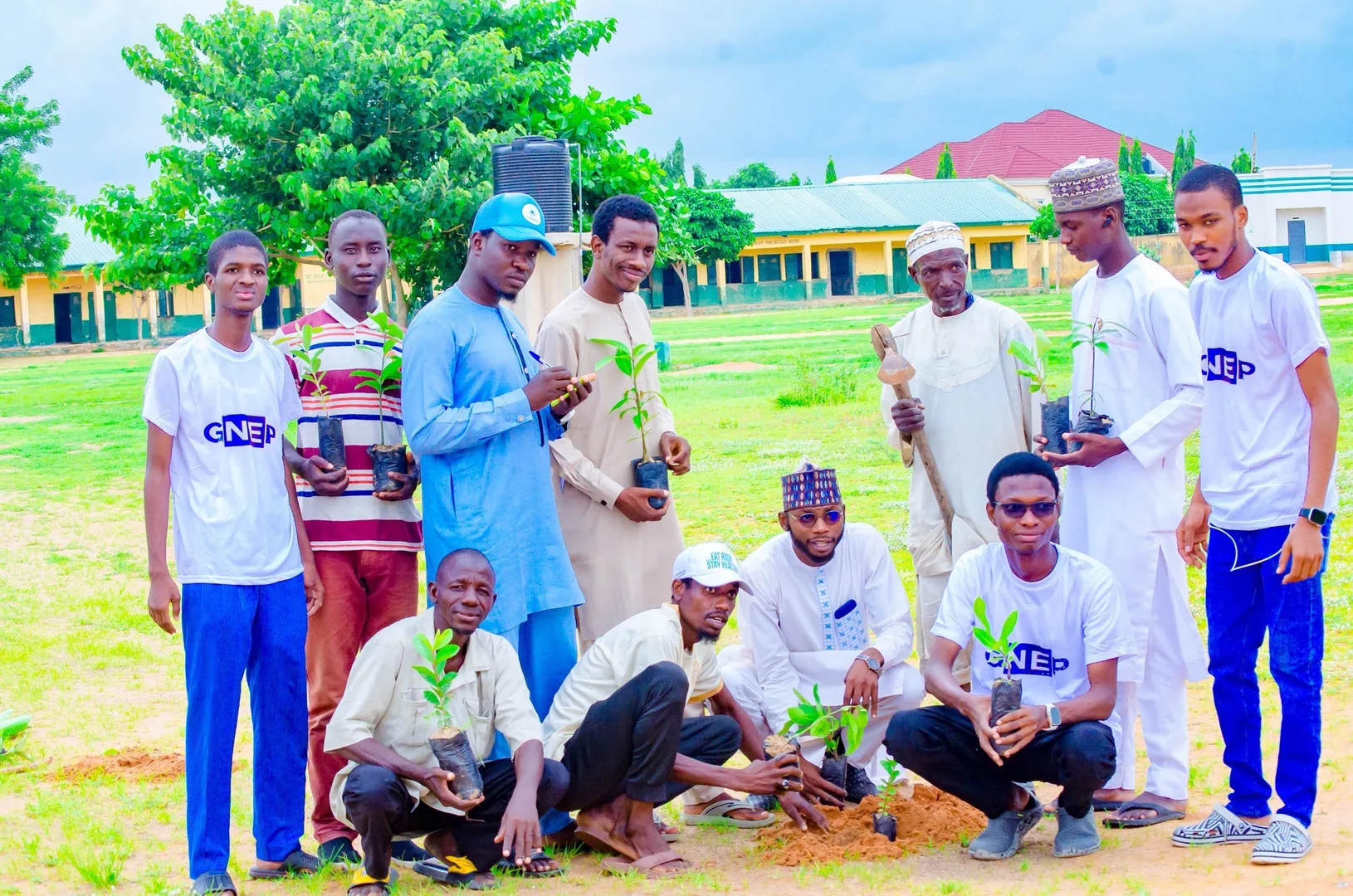
The Global Nature and Environmental Partnership (GNEP), in collaboration with the African Youth Initiative Network (AYINET), implemented a tree-planting initiative in Katsina State, Nigeria, involving the planting of 150 economic tree seedlings. The initiative reflects a shared commitment to environmental restoration, sustainable land management, and community participation in addressing environmental challenges across the Sahel.
In northern Nigeria, environmental pressures, including land degradation, irregular rainfall, rising temperatures, and desertification risks, place increasing strain on agricultural livelihoods and local ecosystems. Tree planting and landscape restoration can contribute to addressing these challenges when supported by appropriate species selection, community involvement, and sustained maintenance.
Supporting Environmental Restoration
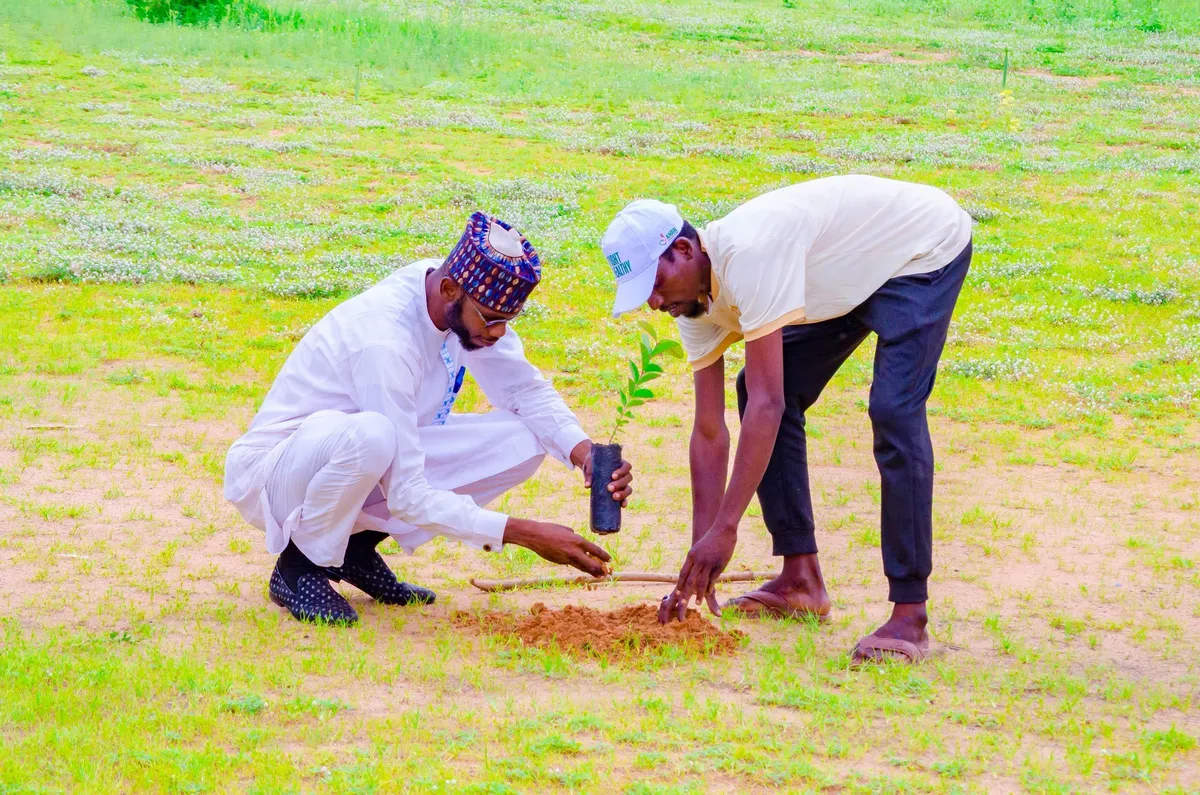
The initiative focused on planting economic tree seedlings to support environmental rehabilitation and strengthen local green spaces. Beyond their potential environmental benefits, suitable economic tree species can provide communities with products and resources that contribute to livelihoods over time.
Trees can help protect soil from erosion, improve soil structure, provide shade, support biodiversity, and contribute to carbon storage. Depending on the species and local conditions, they may also offer food, fodder, and other useful products.
In areas affected by land degradation, these benefits depend on selecting species adapted to local conditions, planting at appropriate times, and ensuring that seedlings receive adequate care during their establishment.
Partnerships for Local Environmental Action
The collaboration between GNEP and AYINET demonstrates the value of partnerships in delivering practical environmental initiatives. By bringing organisations together around a shared objective, such activities can create opportunities for community participation and strengthen awareness of environmental stewardship.
For GNEP, the initiative forms part of its broader interest in climate resilience, nature restoration, and locally driven environmental action. It also provides a practical entry point for engaging communities in discussions about land management, climate adaptation, and the relationship between healthy ecosystems and sustainable livelihoods.
Beyond Planting: Sustaining the Impact
Planting seedlings is an important first step in restoration, but the longer-term value of the intervention will depend on their survival and growth. Water availability, soil conditions, grazing pressure, protection from damage, and regular monitoring can all influence the success of tree-planting initiatives in semi-arid environments.
Continued monitoring would help establish how many seedlings survive, which species perform best, and what environmental or livelihood benefits emerge over time. Documenting these results would also provide useful evidence for improving future restoration activities in Katsina State and other parts of northern Nigeria.
Advancing Community Resilience
Through this initiative, GNEP and AYINET contribute to a wider effort to encourage practical environmental action and promote greater community awareness of sustainable land management.
The planting of 150 economic tree seedlings represents a tangible starting point for local restoration. With sustained care, effective partnerships, and continued community participation, initiatives of this kind can support broader efforts to strengthen ecosystem health and build resilience to environmental pressures.
About GNEP & Project Partner
The Global Nature and Environmental Partnership (GNEP) is a youth-led environmental initiative based in Katsina State, Nigeria. Its areas of interest include climate action, environmental sustainability, youth engagement, policy advocacy, nature restoration, and capacity development.
Project Partner: African Youth Initiative Network (AYINET).